
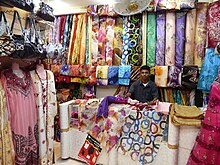
A textile or cloth is a flexible material consisting of a network of natural or artificial fibres (yarn or thread). Yarn is produced by spinning raw fibres of wool, flax, cotton, or other material to produce long strands. Textiles are formed by weaving, knitting, crocheting, knotting, or felting.

Knitting is a method by which yarn is manipulated to create a textile or fabric. Knitting creates multiple loops of yarn, called stitches, in a line or tube. Knitting has multiple active stitches on the needle at one time. Knitted fabric consists of a number of consecutive rows of interlocking loops. As each row progresses, a newly created loop is pulled through one or more loops from the prior row, placed on the gaining needle, and the loops from the prior row are then pulled off the other needle.

A loom is a device used to weave cloth and tapestry. The basic purpose of any loom is to hold the warp threads under tension to facilitate the interweaving of the weft threads. The precise shape of the loom and its mechanics may vary, but the basic function is the same.

The most common plant fiber is cotton, which is typically[3] spun into fine yarn for mechanical weaving or knitting into fap.

Spun yarn is made by twisting staple fibres together to make a cohesive thread, or "single."[4] Twisting fibres into yarn in the process called spinning can be dated back to the Upper Paleolithic,[5] and yarn spinning was one of the very first processes to be industrialized.


